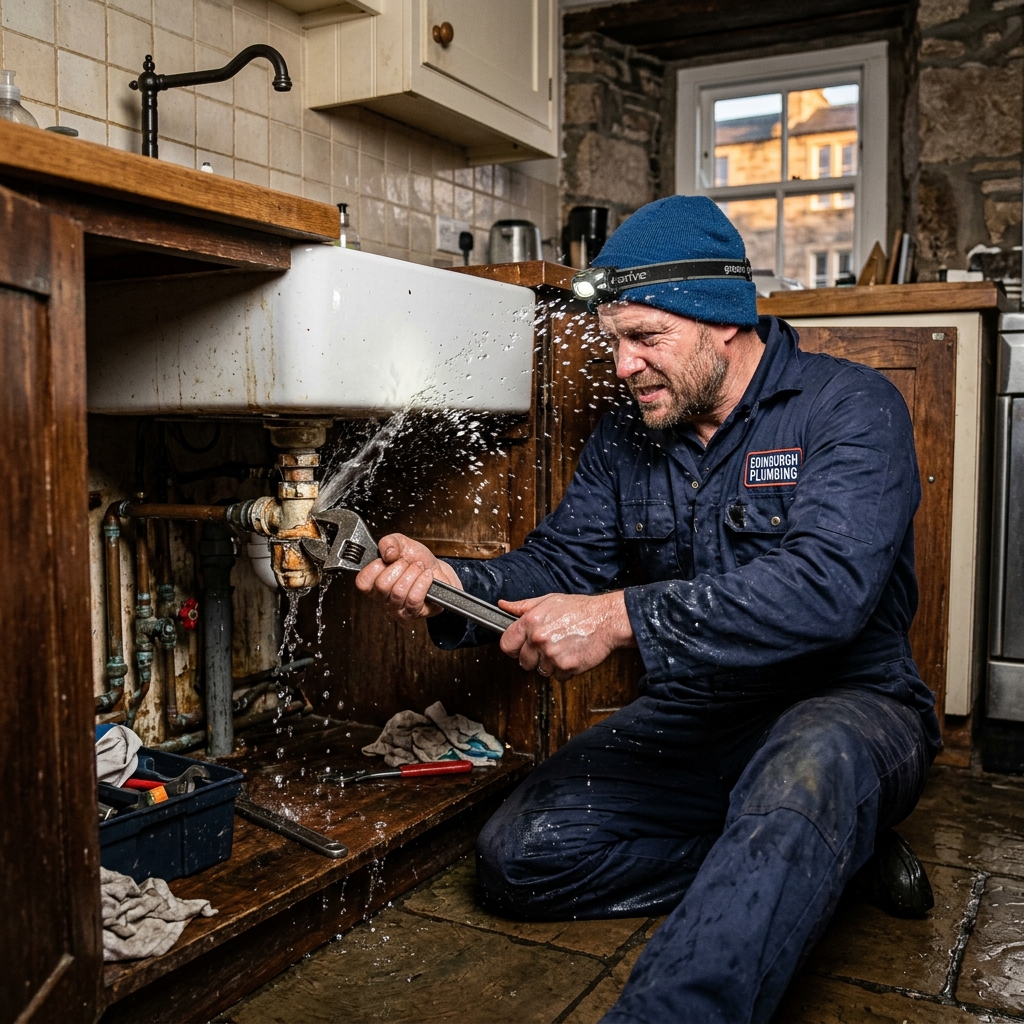
The Reality of Emergency Plumbing in Edinburgh
If you live in Edinburgh, you already know that our city's architecture is a massive part of its charm. From the stunning Georgian townhouses in the New Town to the towering Victorian tenements in Marchmont and Bruntsfield, the buildings here have character. However, as any experienced tradesman will tell you, that character comes with a complex, often ancient, plumbing infrastructure. When things go wrong, they tend to go spectacularly wrong.
Emergency plumbing in Edinburgh isn't just about showing up with a wrench; it's about understanding the specific quirks of properties that might be over a hundred and fifty years old. It’s about knowing how gravity-fed systems operate, understanding where stopcocks were traditionally hidden in 19th-century builds, and dealing with the unique challenges posed by Scotland’s famously harsh winters.
What Constitutes a Genuine Plumbing Emergency?
One of the most common questions we get on the phone is, "Is this an emergency, or can it wait until Monday?" It’s a fair question. Nobody wants to call a plumber out at 2am unless they absolutely have to. Here is a definitive look at what qualifies as a genuine plumbing emergency.
1. Burst Pipes and Uncontrollable Leaks
This is the most obvious and damaging emergency. If a pipe has burst and water is actively flowing into your property, you need an emergency plumber immediately. Even a few minutes of unrestricted water flow can cause thousands of pounds worth of structural damage, ruin carpets, destroy electrical systems, and seep into the flat below yours (a very common scenario in Edinburgh tenements).
2. Complete Loss of Water Supply
If you turn on your taps and nothing comes out, and you’ve already checked with Scottish Water that there isn’t a local outage, you have an emergency. A home without running water becomes uninhabitable very quickly, especially if you have young children or elderly relatives living with you.
3. Blocked or Overflowing Toilets
A toilet that won't flush is an inconvenience; a toilet that is backing up and overflowing raw sewage into your bathroom is a severe health hazard. Wastewater contains harmful bacteria, and if it begins to flood your floor, it requires immediate professional intervention.
4. Gas Leaks and Carbon Monoxide Risks
If you smell gas, or your carbon monoxide alarm sounds, this is an absolute emergency. Before you even call a plumber, you must turn off your gas supply at the meter, open all your windows, and evacuate the property. Once you are safe, you must call a Gas Safe registered engineer. Never take risks with gas.
The "Edinburgh Effect" on Plumbing
Why is plumbing in Edinburgh so specific? It largely comes down to the tenements. A massive percentage of the city's population lives in flats that share a common roof, common walls, and crucially, common plumbing stacks.
When a pipe bursts on the top floor of a four-storey tenement, gravity takes over. The water doesn't just damage one property; it cascades down, potentially ruining the ceilings, floors, and belongings of three other households beneath it. In these situations, speed is the only thing that mitigates the damage. You need an emergency plumber who knows the local roads, knows where to park, and most importantly, knows how to quickly isolate the water supply in a building where the main stopcock might be buried under decades of debris in a communal stairwell.
What to Do While You Wait for the Plumber
If you've identified an emergency and called us out, you might feel helpless waiting for the van to arrive. However, there are crucial steps you can take to protect your home in the meantime.
Step 1: Isolate the Water Supply
Your absolute priority is to find your internal stopcock and turn it clockwise to shut off the water. In modern Edinburgh builds (like those out in Corstorphine or South Gyle), it’s usually under the kitchen sink. In older properties, it could be boxed in a hallway, under the floorboards by the front door, or occasionally in a shared stair. If you can’t turn it by hand, don't force it with a hammer—wait for the professionals.
Step 2: Turn Off the Electrics
Water and electricity are a lethal combination. If water is leaking anywhere near electrical sockets, light switches, or appliances, go to your fuse box (consumer unit) and flip the main switch to 'OFF'.
Step 3: Open the Cold Taps
Once you've turned the stopcock off, open your cold taps. This drains the remaining water sitting in the pipes, meaning there's less water available to leak out of the burst section.
Step 4: Contain the Damage
Grab buckets, towels, and mops. Try to catch as much of the falling water as possible. Move expensive electronics, sentimental items, and rugs out of the affected area.
Why Choosing a Truly Local Plumber Matters
When you frantically search for an "emergency plumber Edinburgh" on your phone, you'll see dozens of results. However, many of the top results are actually national call centres. When you ring them, you're speaking to an operator in another city who then tries to subcontract the work to a local tradesman. This adds delays, increases costs, and means you have no idea who is actually turning up at your door.
Choosing a genuinely local firm means when you call, you speak to a plumber who knows the city. They know that getting from Leith to Morningside at 5pm is a nightmare, so they'll dispatch the engineer who is already working in the Southside. They carry the specific fittings required for Scottish plumbing systems, and they don't charge exorbitant middle-man fees.
The Cost of Emergency Plumbing: What to Expect
We believe in total transparency regarding costs. An emergency call-out will generally cost more than a scheduled daytime appointment because the engineer is dropping everything, working unsociable hours, and rushing to your aid. However, you should never be held to ransom.
A reputable emergency plumber will never charge a call-out fee just to arrive at your property. You should only pay for the work carried out. Once the engineer assesses the situation, they should provide a clear, fixed quote. If they tell you the price is an "hourly rate plus materials," be very careful, as this is how a £150 repair turns into a £600 nightmare.
At 247 Plumbing Edinburgh, we assess the leak, give you a fixed price to repair it permanently, and only begin work once you say yes. No surprises, no hidden fees.
Preventing the Emergency
While we are always ready to respond to a crisis, we'd much rather you didn't have one in the first place. The best way to handle an emergency is to prevent it.
- Insulate your pipes: Scottish winters are brutal. Ensure all pipes in unheated areas (like lofts or basements) are heavily lagged with proper foam insulation.
- Service your boiler: Have your boiler serviced every summer. Finding out your boiler is broken in November is a miserable experience.
- Know your stopcock: Find your stopcock today. Test it to make sure it turns. If it’s seized solid, call a plumber to replace it now, rather than waiting for a burst pipe to find out it doesn't work.
Conclusion
Plumbing emergencies are stressful, damaging, and highly disruptive. But by knowing what to do, acting quickly, and having the number of a trusted, local Edinburgh plumber saved in your phone, you can mitigate the damage and get your home back to normal as quickly as possible. Don't wait for the crisis to hit—be prepared.